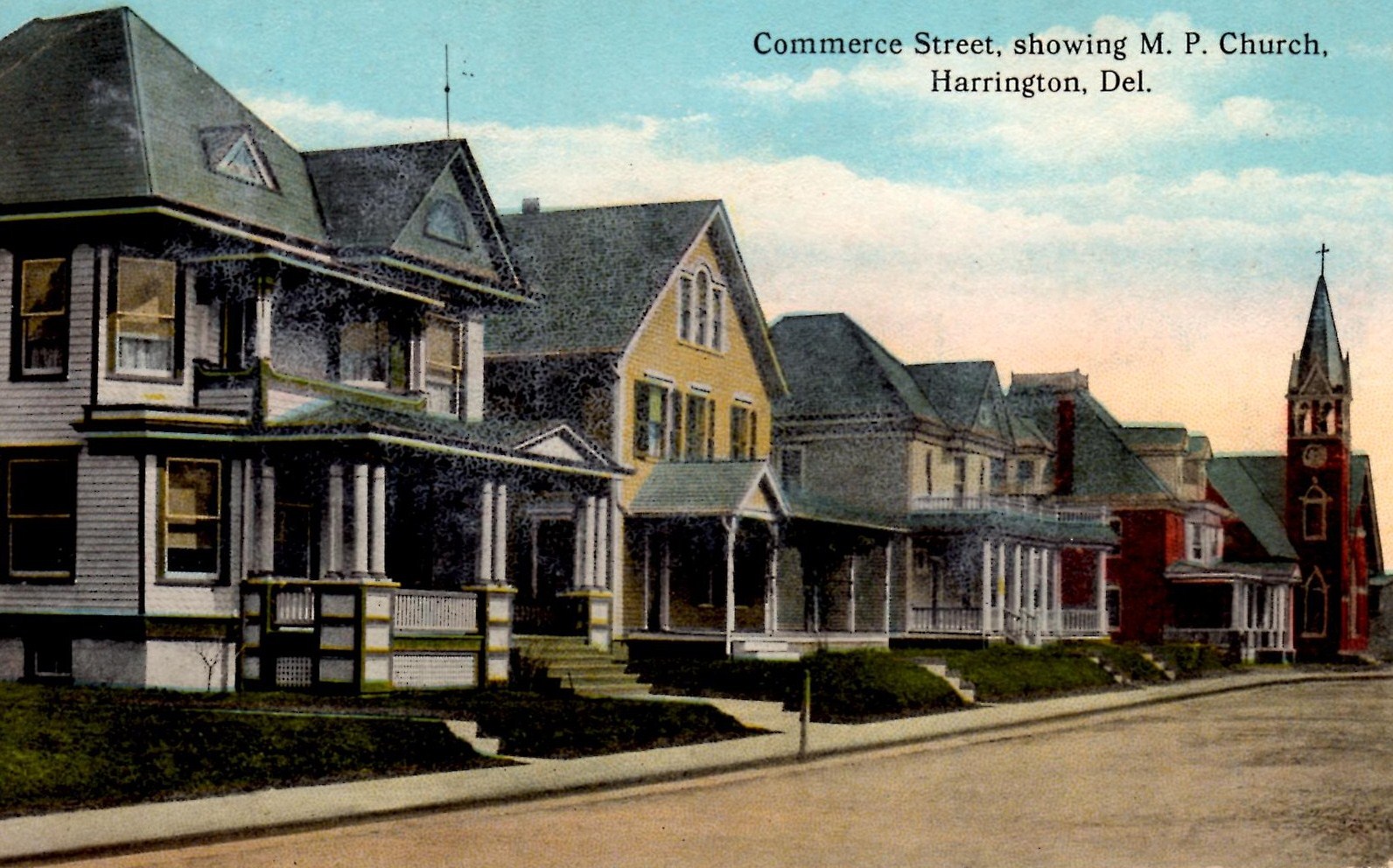


Description
“What’s in a name?” is a quote from Romeo and Juliet, written by William Shakespeare. As in the famous play, a name invokes so much more than the sum of its letters. This is true of anyone’s hometown. Our hometown’s name recalls our days as children, playing in the park with friends. Some remain, while others are long gone. It reminds us of family, the people that formed us, loved us, and gave us life. Those long-ago holidays, dinners, and memories all shaped who we are. They form a tapestry. Pull on one string and you unravel the story of you.
Such it is with Harrington, a small community that has, for over 300 years, not simply existed as a dot on a map but has been the town so many have called home. An area rich in farmland and inland waterways, the indigenous people, known as the Kuskarawaoks, first settled and flourished here.
In 1681, William Clark received a land grant for the area that would eventually become Harrington. Clark was given a large portion of the lands known as the Mispillion Hundred, a total land grant that encompassed over 3,000 acres of farm and woodland. William’s son, Thomas, would later own 650 acres in the center of this vast expanse and build his home here in the early 1700s. He named his piece of heaven “Clark’s Folly.” It is from this farmhouse our city was born.
“The Hub of Delaware” became Harrington’s nickname due to its role on the railroad. As Samuel Harrington predicted, opening Harrington and other areas of Delaware to rail traffic created a boom to all aspects of life. Trains full of freight and passengers traveled the lines multiple times a day.
Today the city is growing again as it celebrated its sesquicentennial in 2019. To most that live here today, it’s still their hometown. People call each other by their first name as they sit down to have coffee in their favorite restaurant. Neighbors still sit outside during a summer night, sharing ice cream and watching the fireflies. The “Mayberry” feel is still very much present in my hometown. While we do not have a mall, a multiplex theater, or a five-star hotel, what we have is home. Small-town America in every way, Norman Rockwell could have made every Saturday Evening Post cover from our streets.


